Not every chauffeur journey comes with blue skies and an empty motorway. In fact, some of the most important work happens on the nights that feel a bit grim: rain on the windscreen, the light fading fast, and headlight glare from the other carriageway dazzling through the spray.
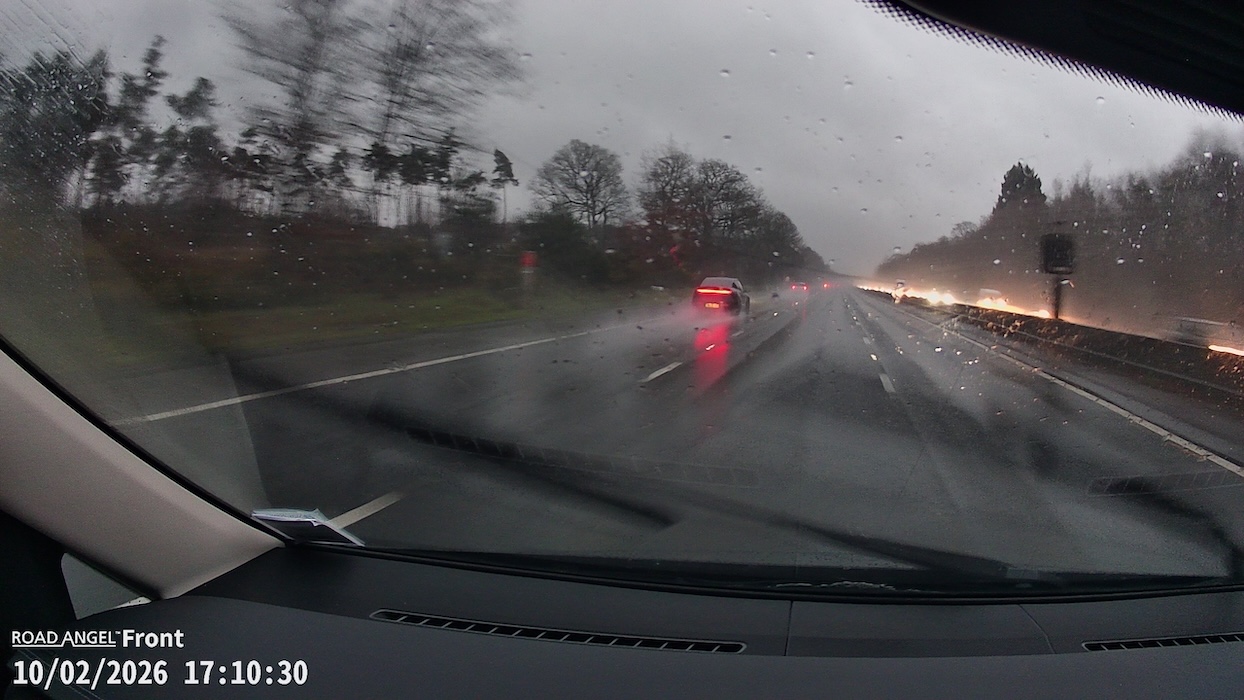
This image was taken at 17:10 in early February 2026 from the front passenger seat of one of our Mercedes V-Class vehicles, captured via Road Angel. We were northbound on the M3 near Winchester, heading to Heathrow — a routine airport transfer that we do week in, week out for clients travelling from Hampshire and the South Coast.
And yet “routine” doesn’t mean “easy”. Rain changes everything. Road markings can fade into reflections, braking distances increase, and visibility drops just as traffic builds around the evening rush. Add oncoming headlights and wet road spray and you’ve got a driving environment that demands real concentration.
This is where professional standards matter. Not the kind you post about when everything goes perfectly — but the kind you rely on when conditions aren’t ideal. Smooth driving, safe spacing, patient decision-making and constant awareness of what’s happening ahead are what keep an airport run calm for the passenger. The client shouldn’t feel the stress of the road. They should feel the comfort of the cabin and the confidence that the journey is being handled properly.
So, here’s a behind-the-scenes look at one of those “nothing glamorous, but everything important” moments on the M3 — the kind of evening where good driving really counts
The hidden challenge of wet-weather motorway driving
Driving in heavy rain on a motorway isn’t simply “slower”. It’s a completely different style of driving.
Rain creates:
-
reduced visibility (spray from other vehicles)
-
longer stopping distances
-
more fatigue from constant focus
-
glare and dazzle, especially at dusk
-
higher risk of sudden braking waves in traffic
On runs like this, the driver is constantly reading the road: not just what’s immediately ahead, but what might happen two or three vehicles in front. It’s about staying smooth and keeping passengers comfortable — without taking risks.
Glare: the “silent” problem many drivers underestimate
The glare you can see in this photo is a classic winter motorway issue: darkness arriving early, rain reflecting every light source, and headlights on the opposite carriageway bouncing off the wet surface.
It’s one of those things that can be surprisingly tiring. A professional driver manages it by:
-
maintaining sensible spacing
-
avoiding abrupt lane changes
-
using mirrors and position carefully
-
keeping the cabin calm and controlled
Why we still aim for calm, even when the road isn’t
Clients often don’t realise how much planning goes into a Heathrow run — particularly in winter.
A good airport transfer isn’t about “getting there fast”. It’s about:
-
leaving with sensible time buffers
-
monitoring the main corridors (M3/M25 approaches)
-
taking a steady pace that avoids harsh braking
-
keeping passengers relaxed — especially after a long day
On evenings like this, you don’t fight the conditions. You respect them, adapt, and deliver a safe, smooth journey.
“Routine” runs are where standards are proved
It’s easy to look professional when the roads are quiet and the weather is kind. The real test is when conditions are poor and the motorway is busy — and the job still needs doing.
That’s why we place so much emphasis on:
This is how you turn a wet, gloomy February evening into a journey where the passenger can simply sit back and trust the process.
A small fun truth: winter Heathrow runs are a world of their own
If you’ve travelled in and out of Heathrow in winter, you’ll know the feeling: flights don’t stop, schedules don’t wait, and the roads can be unpredictable.
But there’s also something oddly satisfying about a winter airport run:
-
the cabin feels warmer and quieter
-
the traffic thins after the rush
-
and when you pull up at the terminal on time, it feels like a little win
Not dramatic. Just professional.
FAQs
Do you provide Heathrow transfers from Winchester and Hampshire?
Yes. Heathrow runs via the M3 corridor are a regular part of our work.
Do you still run airport transfers in bad weather?
Yes — we plan properly, allow sensible time buffers and drive to conditions.
What vehicle is best for Heathrow transfers with luggage?
A Luxury MPV such as a Mercedes V-Class is often ideal for comfort and luggage space.
Fact of the Day
In wet conditions, stopping distances can increase significantly — which is why smooth driving and proper spacing make such a difference on motorway airport runs.
Local Relevance
Plus Chauffeurs regularly provides Airport Transfers from Southampton, Winchester, Portsmouth and the wider Hampshire area to Heathrow and Gatwick. The M3 corridor is one of our core routes, and our approach is always the same: plan properly, drive safely, and keep the journey calm for the passenger — whatever the weather is doing.
Book Your Chauffeur Service Today
Whether you’re a regular client or planning your first journey, Plus Chauffeurs is here to provide luxury transport solutions that match your expectations — both on the road and online.
Book your next chauffeur-driven journey today!
Call us at +44(0)3333444018, visit www.pluschauffeurs.co.uk, or email enquiries@pluschauffeurs.co.uk to make your reservation.