The hidden planning behind long-distance chauffeur travel
Most people see the pick-up, the car, the driver, and the arrival. What they don’t see is the thinking that happens before the engine even starts — route planning, timing buffers, rest considerations, contingency options, and (sometimes) a sensible overnight stop so the next day runs like clockwork.
For Plus Chauffeurs, longer-distance work is part of everyday life: airport runs, cruise transfers, business travel, multi-day itineraries, and “there, wait, and return” bookings where the driver remains local to the client’s schedule. These are the journeys where professionalism shows up in the boring bits: being on time without rushing, being prepared for traffic, and managing energy levels so the standard stays consistent throughout.
It’s also where the small advantages count. A stopover isn’t “time off” — it’s a quality-control decision. It means:
- The driver can start fresh for an early morning collection
- The journey is paced properly (and feels calmer for the client)
- Your itinerary has resilience if anything shifts
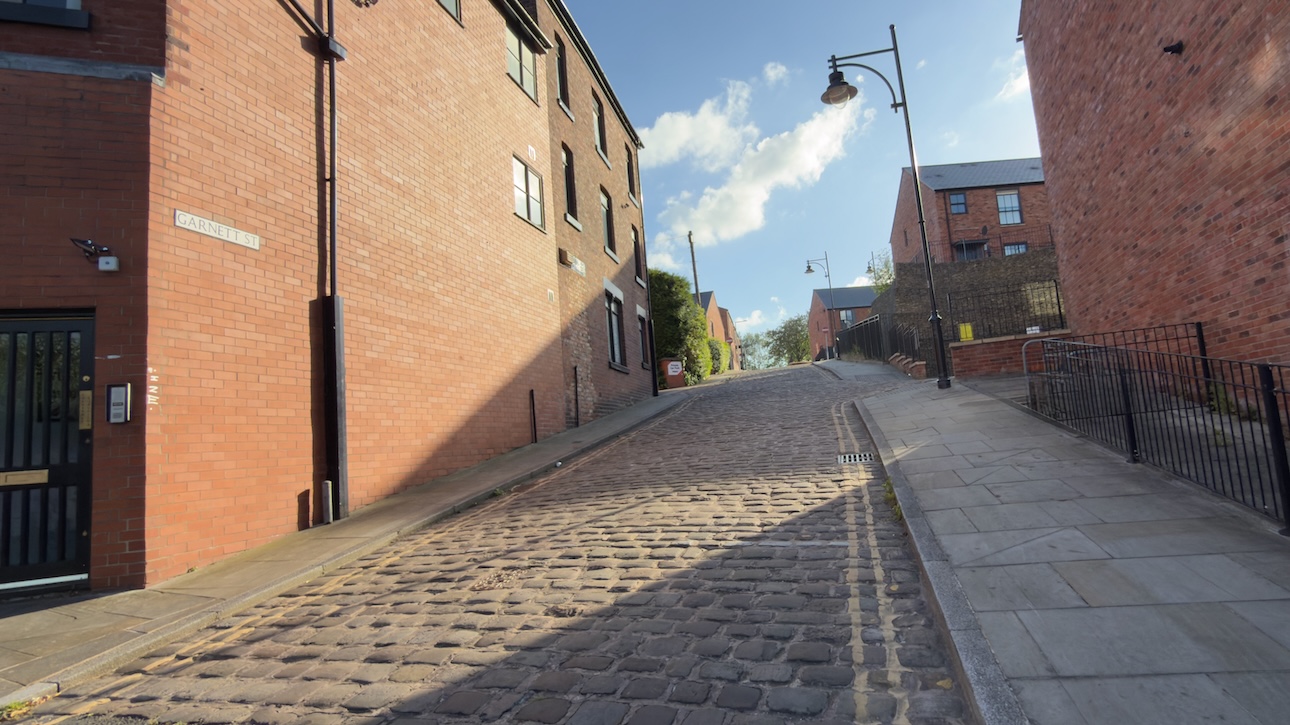
And sometimes, in the middle of all that planning, you stumble across a street like Garnett Street — a reminder that not everything modern is automatically better, and not everything old is automatically comfortable.
Cobblestones, setts, and why they’re still around
First, a quick note: what most people call “cobblestones” are often setts — cut stone blocks set into the road surface. True cobbles are naturally rounded stones, traditionally gathered from riverbeds or beaches. Either way, the principle is similar: stone surfacing designed to be tough, weather-resistant, and repairable in sections.
Why did towns use stone streets in the first place? Because they lasted. Before modern asphalt, stone was a practical answer to heavy use, wet weather, and constant wear from carts, horses, early vehicles and foot traffic. Properly laid stone surfacing can handle decades (even centuries) of use with maintenance that’s often “replace a small section” rather than “resurface the whole road”.
That said, cobbles have their downsides:
- They can be noisy (especially for older vehicles)
- They’re less comfortable to drive over at speed
- They can be slippery in certain conditions
- They’re harder for cyclists and less accessible for some mobility needs
So why do they still exist in places like Stockport? Partly because they’re historically valuable and visually distinctive — and partly because, in the right setting, they slow everything down. In busy pedestrian areas or older quarters, “slower is safer” is the point.
Why cobblestones went out of fashion
The shift away from stone streets wasn’t just about comfort. Modern road building became more systematic, faster, and cheaper to roll out at scale. Asphalt and modern surfacing offer:
- smoother journeys (better for passengers and vehicles)
- reduced noise
- improved traction and consistency
- easier winter maintenance
- faster installation on long stretches of road
As car ownership grew, cities also needed surfaces suited to higher speeds, heavier traffic volumes, and modern tyre performance. What works brilliantly for a horse and cart at walking pace doesn’t necessarily work for thousands of vehicles per day.
So stone streets moved from “everyday road surface” to “heritage feature” — kept where they add character, kept where they calm traffic, and kept where history matters.
A few famous cobbled streets (and why people love them)
There’s something about cobbles that makes people slow down and take a photo — even if they wouldn’t want to commute over them daily. A few well-known examples across the UK include historic quarters in cities like Edinburgh, York, and older market towns where stone streets still anchor the “feel” of the place. The charm is simple: cobbles instantly signal history, craftsmanship, and identity.
That’s exactly what happened here. The driver didn’t set out to “find content” — he simply noticed something that looked timeless and worth sharing.
How this connects to chauffeur service (and your journey)
It might seem like a leap from cobblestones to chauffeur travel — but it’s not. This is really about how we treat the details.
When we handle long-distance travel, we build the journey around:
- comfort: smooth driving, correct vehicle choice, space and temperature control
- timing: arriving early, managing buffers, being ready if schedules shift
- planning: route options, traffic patterns, rest points, and sensible pacing
- presentation: professional drivers, clean vehicles, and consistent standards
This matters for corporate travel, PA/EA-managed itineraries, and clients who simply want the reassurance that someone is thinking ahead on their behalf.
If a client needs multiple stops, a multi-day itinerary, or a longer-distance run that requires an overnight stay, we’ll plan it properly. And if there’s a better option for the vehicle type (for luggage, comfort, group size, or the “feel” of the journey), we’ll advise it.
Our Vehicles: https://www.pluschauffeurs.co.uk/our-vehicles
FAQ
Do you offer long-distance chauffeur travel across the UK?
Yes — we regularly provide long-distance journeys and multi-day itineraries across the UK, including business travel, events, and cruise/airport connections.
Can you do “there, wait, and return” bookings?
Yes. Where practical, we can plan a stay-and-wait or a return collection, depending on timings, location, and driver scheduling.
Do long journeys require an overnight stay?
Sometimes. If it helps maintain safety, timing reliability, and a consistent service standard (particularly for early morning collections), an overnight stop can be the sensible option.
How do I choose the right vehicle?
Tell us passenger numbers, luggage, and your preference (executive, luxury, MPV, electric). We’ll recommend the best fit. Our Vehicles: https://www.pluschauffeurs.co.uk/our-vehicles
How do I book?
Bookings: https://www.pluschauffeurs.co.uk/bookings
Fact of the Day
Many UK licensing authorities require private hire and chauffeur vehicles to undergo inspections even when they’re too new to need an MOT — adding an extra layer of safety oversight for passengers.
Local Relevance
Based in Southampton and serving Hampshire, Plus Chauffeurs regularly covers Winchester, Portsmouth, the New Forest, and UK-wide long-distance journeys. Whether you’re travelling to Heathrow, Gatwick, London, or further afield, the same approach applies: plan properly, drive smoothly, and make the whole experience feel effortless for the passenger.
Book Your Chauffeur Service Today
Whether you’re a regular client or planning your first journey, Plus Chauffeurs is here to provide luxury transport solutions that match your expectations — both on the road and online.
Book your next chauffeur-driven journey today!
Call us at +44(0)3333444018, visit www.pluschauffeurs.co.uk, or email enquiries@pluschauffeurs.co.uk to make your reservation.